
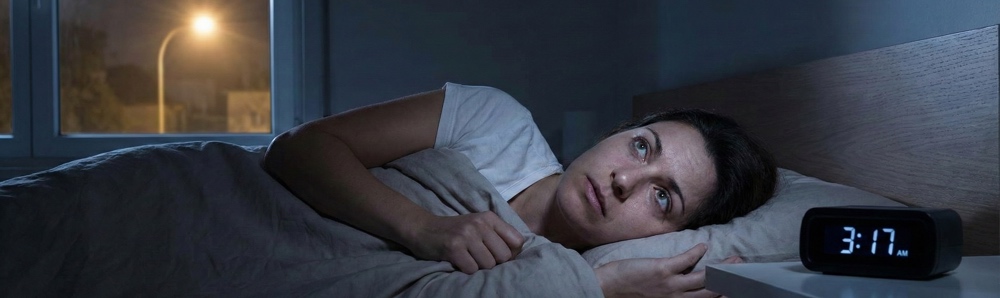
For many people living with anxiety disorders, the most difficult part of the day is not the morning commute, a stressful meeting, or a crowded social event. Instead, it is the quiet hours after sunset. As the world slows down and distractions disappear, anxiety may actually grow louder. When the day starts to settle, thoughts race, worries intensify, and sleep can feel frustratingly out of reach.
This phenomenon is so common that many individuals with anxiety disorders describe nighttime as the period when their symptoms feel the most overwhelming. While each person’s experience is unique, scientific research suggests that there are real biological and psychological reasons why anxiety may become more noticeable at night.
What Nighttime Anxiety Looks Like
Nighttime anxiety can take many forms. Some individuals experience a surge of worry as soon as they get into bed. Others notice a growing sense of unease during the evening hours that continues until they fall asleep.
Common experiences include:
- Replaying conversations or events from earlier in the day
- Worrying excessively about future responsibilities or problems
- Difficulty shutting off intrusive thoughts
- Increased awareness of physical sensations such as heart rate, breathing, or muscle tension
- Feeling restless, agitated, or unable to relax
- Difficulty falling asleep or staying asleep
- Experiencing panic symptoms during the night
For individuals with generalized anxiety disorder, social anxiety disorder, panic disorder, or related conditions, the nighttime environment often provides fewer distractions for anxious thoughts. While during the day, work, social interactions, errands, and entertainment can occupy mental space, at night, those distractions fade, leaving room for worries to become the primary focus of attention.
Research on cognitive arousal and sleep has found that elevated mental activity before bed is strongly associated with longer sleep onset, reduced sleep quality, and greater physiological arousal. Individuals who experience persistent worry at night often remain mentally activated even when their bodies are attempting to transition into sleep. This state of hyperarousal can make restful sleep difficult to achieve.
The Science Behind Evening Anxiety
Although nighttime anxiety often feels purely psychological, biology plays an important role.
Human beings operate according to circadian rhythms, which are approximately 24-hour cycles that regulate sleep, hormone release, body temperature, alertness, and emotional functioning. These rhythms help determine when the body feels energized and when it prepares for rest. Research has increasingly linked disruptions in circadian functioning to anxiety symptoms and anxiety disorders.
Studies examining daily fluctuations in anxiety have found that symptoms often change across the day. Individuals with anxiety-related disorders, particularly those with evening chronotypes, frequently report their highest anxiety levels during the evening hours.
What contributes to this pattern?
Reduced Cognitive Distraction
During the day, attention is divided among numerous tasks and responsibilities. At night, external stimulation decreases dramatically. Without competing demands, the brain may shift attention toward unresolved concerns, worries, and perceived threats.
For individuals prone to anxiety, this can create an environment in which rumination and excessive worry intensify. Thoughts that were at least partially suppressed throughout the day may resurface once the mind is no longer otherwise occupied.
Fatigue and Reduced Emotional Resources
Mental and emotional self-regulation requires energy. By evening, many people have already spent an entire day managing stressors, making decisions, and regulating emotions.
As fatigue accumulates, it may become more difficult to challenge anxious thoughts effectively. Concerns that might seem manageable in the morning can appear overwhelming late at night when cognitive resources are depleted.
Sleep Pressure and Hyperarousal
Ironically, anxiety about sleep itself can become a powerful source of stress.
Individuals who have previously struggled with insomnia may begin monitoring whether they are falling asleep quickly enough. This heightened attention to sleep can increase physiological arousal, making sleep even more difficult. Research has shown that nighttime cognitive arousal is associated with objective indicators of sleep disturbance and physiological activation.
The result is often a self-reinforcing cycle: anxiety interferes with sleep, poor sleep increases anxiety, and heightened anxiety further disrupts sleep.
Circadian Influences
Researchers have also identified links between circadian regulation and anxiety symptoms. Variations in circadian timing, including a tendency toward later sleep schedules, appear to be associated with increased anxiety and negative emotional experiences. Disruptions in internal biological rhythms may therefore contribute to the timing and intensity of anxiety symptoms.
What Can Be Done?
Understanding that anxiety often follows predictable daily patterns can be a helpful tool.
Rather than assuming that nighttime worries represent urgent problems requiring immediate solutions, individuals can recognize that their anxiety may be amplified by the time of day.
This awareness can influence decision-making in practical ways.
For example, someone who notices a consistent pattern of nighttime catastrophizing may choose to postpone major decisions until the following morning. A problem that feels unsolvable at 11:00 p.m. may appear far more manageable after a full night’s rest.
Similarly, individuals can create boundaries around nighttime problem-solving. Instead of attempting to resolve every concern before bed, they can acknowledge that anxiety tends to magnify uncertainty during evening hours and intentionally revisit the issue when they are more rested.
Recognizing patterns also helps reduce the tendency to interpret nighttime anxiety as evidence that something is seriously wrong. In many cases, the heightened distress reflects a predictable interaction between anxiety, fatigue, and circadian rhythms rather than an actual increase in danger.
Tools That Can Help Reduce Nighttime Anxiety
While no single solution works for everyone, several evidence-based strategies can help reduce nighttime anxiety symptoms.
Establish a Consistent Sleep Schedule
Maintaining regular sleep and wake times helps support healthy circadian functioning. Consistency strengthens the body’s internal clock and may reduce vulnerability to both sleep disruption and anxiety-related symptoms.
Create a Worry Period Earlier in the Day
Some therapists encourage individuals to schedule a dedicated time during the afternoon or early evening to think through concerns and possible solutions.
By giving worries a designated place in the day, the brain may become less likely to revisit them repeatedly at bedtime.
Limit Stimulation Before Bed
Bright light exposure, emotionally activating media, and work-related activities can increase physiological arousal when the body should be preparing for sleep.
Creating a calmer evening environment can support the natural transition toward rest.
Practice Mindfulness and Relaxation Skills
Mindfulness exercises, progressive muscle relaxation, slow breathing techniques, and guided imagery can help shift attention away from anxious thought loops and reduce activation of the body’s stress response.
These approaches do not eliminate anxiety immediately, but they can reduce the intensity of symptoms and improve emotional regulation.
Address Sleep Problems Directly
Because anxiety and sleep difficulties often reinforce one another, treating insomnia can sometimes reduce anxiety symptoms as well.
Cognitive Behavioral Therapy for Insomnia (CBT-I) has substantial empirical support and may help individuals break the cycle of nighttime worry and sleep disruption.
Seek Professional Support
Persistent nighttime anxiety that significantly interferes with sleep, functioning, or quality of life may benefit from professional treatment. Cognitive Behavioral Therapy, acceptance-based approaches, and exposure therapies have all demonstrated effectiveness for various anxiety disorders.
The Big Picture
For many individuals with anxiety disorders, nighttime can feel like an entirely different world. The quiet, darkness, fatigue, and absence of distraction can create conditions in which worries become more intense and sleep becomes more elusive.
However, research suggests that these experiences are not random. Circadian rhythms, cognitive arousal, sleep processes, and emotional regulation all contribute to the tendency for anxiety to worsen during the evening hours. Understanding these mechanisms can help individuals view nighttime anxiety through a more informed lens.
Rather than treating every nighttime worry as an emergency, it may be more accurate to recognize it as part of a predictable pattern. With appropriate coping strategies, healthy sleep habits, and professional support when needed, many people can reduce the impact of nighttime anxiety and regain a greater sense of calm after the sun goes down.