
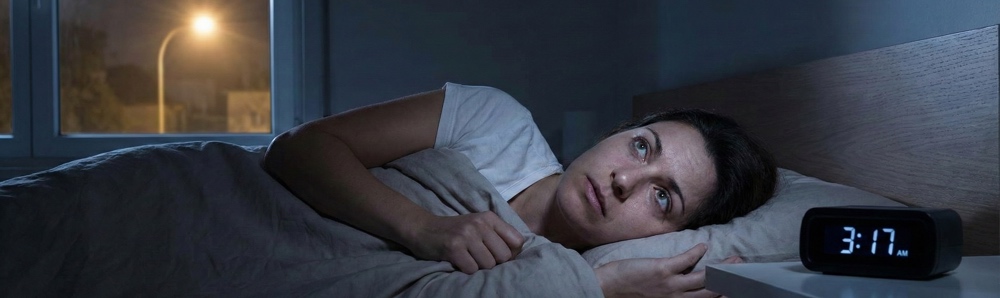
Anxiety that gets worse at night is one of the most common experiences people describe when they first seek treatment. The day may feel manageable, but once the lights go off, the mind starts racing, the chest tightens, and worries that seemed small at noon feel enormous at midnight. Nighttime anxiety is not a separate condition. It is usually the same anxiety disorder showing itself more clearly once the distractions of the day are gone. Evidence-based treatment, including Exposure and Response Prevention (ERP), addresses the pattern behind it rather than just the hours when it feels loudest.
Understanding why the evening amplifies anxiety is the first step toward changing it.
Key Takeaways
- Anxiety often feels worse at night because the distractions, tasks, and people that occupy the mind during the day are no longer present.
- Nighttime is when avoidance and reassurance-seeking stop working, which leaves anxious thoughts with nothing to compete against.
- Physical fatigue lowers the mind’s ability to dismiss intrusive worries, so ordinary concerns can feel catastrophic after dark.
- Nighttime anxiety is usually a symptom of an underlying anxiety disorder rather than a separate problem with sleep.
- Exposure and Response Prevention (ERP) treats the pattern that drives nighttime anxiety, not just the symptoms that appear at bedtime.
- When anxiety disrupts sleep most nights or shapes daily decisions, an intensive outpatient program can provide the structure weekly therapy cannot.
Why Does Anxiety Get Worse at Night?
Anxiety gets worse at night because the daytime activities that normally crowd out anxious thoughts disappear, leaving the mind free to focus on worry. Fatigue reduces the brain’s ability to evaluate threats accurately, and the quiet of the evening removes the reassurance and distraction many people rely on to keep anxiety in check.
During the day, work, conversation, errands, and screens provide constant competition for attention. Anxiety is still present, but it has to share space. At night, that competition ends. The same worry that was easy to push aside at 2 pm now has the whole room to itself.
There is also a physiological piece. Tired minds are less able to reason through a fear and more likely to accept it at face value. A thought like “what if something is wrong with me” gets very little pushback at midnight. For people living with an anxiety disorder, this combination of silence and fatigue creates the perfect conditions for worry to escalate.
What Does Nighttime Anxiety Feel Like?
Nighttime anxiety typically shows up as racing thoughts, a pounding heart, tightness in the chest, restlessness, and a sense of dread that seems out of proportion to the day’s events. Many people describe replaying conversations, rehearsing worst-case scenarios, or feeling physically wired even though they are exhausted.
Some people lie awake for hours. Others fall asleep quickly but wake at 3 am with their mind already running. Both patterns are common, and both tend to feed a second layer of worry: anxiety about not sleeping, which makes sleep even harder.
The content of the worry varies. It might be health, relationships, work, or a vague sense that something bad is coming. What stays consistent is the timing. If your anxiety reliably peaks after dark, that consistency is useful information. It points to a pattern, and patterns can be treated.
How Is Nighttime Anxiety Treated?
Nighttime anxiety is treated by addressing the underlying anxiety disorder, most effectively through Exposure and Response Prevention (ERP). ERP helps clients face the thoughts and sensations they fear while dropping the avoidance, mental checking, and reassurance-seeking that keep anxiety alive. As the daytime pattern changes, the nighttime pattern follows.
Many people try to solve nighttime anxiety at night. They add routines, avoid certain thoughts, or reach for their phone to check on something one more time. These strategies offer brief relief, but they teach the brain that the worry was worth responding to. The next night, it comes back stronger.
ERP works differently. Instead of managing the 11 pm spike, it targets the habits that produce the spike. At OCD Anxiety Centers, clients in our intensive outpatient program work with clinically-trained staff to identify their specific avoidance and reassurance behaviors and practice letting anxious thoughts exist without acting on them. The program runs 16 weeks, three hours per day, Monday through Friday, which gives clients enough repetition for new responses to become automatic. Clients report an average symptom reduction of 64%.
When Does Nighttime Anxiety Signal a Larger Problem?
Nighttime anxiety signals a larger problem when it occurs most nights, interferes with sleep for weeks at a time, or starts shaping daytime decisions such as avoiding plans, canceling commitments, or organizing the day around dreading the evening. Occasional restless nights are normal. A persistent pattern usually indicates an anxiety disorder that would benefit from treatment.
A useful question is whether the anxiety has started to expand. If bedtime worry has grown into afternoon worry about bedtime, or if you have begun avoiding situations because you know they will keep you up, the anxiety is no longer confined to the night. It is running the schedule.
At that point, weekly therapy may not provide enough contact time to break the cycle. An intensive outpatient program offers daily practice with the support of an 8:1 client-to-staff ratio, which is often what it takes to change a pattern that has been reinforced night after night.
Nighttime Anxiety Myths and Facts
Several common assumptions about nighttime anxiety keep people from getting the right kind of help.
Myth: Nighttime anxiety is really just a sleep problem.
Fact: For most people, the sleep difficulty is a result of the anxiety rather than the cause of it. Treating the anxiety disorder directly tends to improve sleep as a natural consequence. Sleep-only approaches often miss the pattern that is actually driving the problem.
Myth: If I can distract myself well enough, the anxiety will stop.
Fact: Distraction provides temporary relief but reinforces the idea that the anxious thought is dangerous and must be escaped. Evidence-based treatment helps clients tolerate the thought instead of fleeing it, which reduces its power over time.
Myth: Anxiety at night means something is seriously wrong with my brain.
Fact: Nighttime escalation is a predictable feature of anxiety disorders, not a sign of damage. The same mind that races at midnight can learn a different response with structured, repeated practice.
Moving Forward
If your anxiety gets worse at night, you are not imagining it and you are not alone. The evening simply removes the distractions and reassurance that keep anxiety quiet during the day, which means the nighttime version is often the most honest version. That is uncomfortable, but it is also useful, because it shows exactly what needs to be treated. Exposure and Response Prevention (ERP) addresses the pattern beneath the symptoms, and it works. With the right structure and support, nights can become restful again.
Frequently Asked Questions
Is it normal for anxiety to be worse at night?
Yes. Nighttime escalation is one of the most common patterns people with anxiety disorders describe. It happens because the day’s distractions fade and fatigue makes the mind less able to challenge worried thoughts. It is a recognizable pattern, not a sign that your anxiety is unusual.
Why do I wake up at 3 am with anxiety?
Waking in the early morning with anxiety often happens when the body cycles into lighter sleep and an already active mind seizes the opportunity. If this occurs regularly, it usually points to an underlying anxiety disorder rather than a sleep disorder on its own.
Can Exposure and Response Prevention (ERP) help with nighttime anxiety?
Yes. ERP treats the avoidance and reassurance-seeking behaviors that keep anxiety active throughout the day and night. As clients learn to let anxious thoughts exist without responding to them, the nighttime spikes typically lose intensity.
How long does treatment for nighttime anxiety take?
Our intensive outpatient program is 16 weeks, three hours per day, Monday through Friday. Clients should plan to dedicate 16 weeks of their lives to this. That length allows enough daily practice for new responses to replace old ones.
Do I need intensive treatment or is weekly therapy enough?
If nighttime anxiety is occasional, weekly therapy may be sufficient. If it occurs most nights, disrupts sleep for weeks, or has begun shaping your daytime choices, an intensive outpatient program provides the frequency and structure needed to change the pattern.
Does insurance cover treatment for anxiety?
In most cases, yes. Approximately 95% of clients at OCD Anxiety Centers have their treatment covered by insurance. Our admissions department can verify your specific benefits before you begin.
Can teenagers be treated for nighttime anxiety?
Yes. OCD Anxiety Centers treats clients ages 8 and older through adulthood at our physical locations. Adolescent sessions run from 3 pm to 6 pm, and adult sessions run from 12 pm to 3 pm.
Nighttime anxiety does not have to define your evenings or your days. Exposure and Response Prevention (ERP) offers a proven path toward calmer nights and a steadier life, and our clinically-trained staff are ready to help you get there. Call the OCD Anxiety Centers admissions department at 866-303-4227 to learn more about our intensive outpatient program and take the first step.