
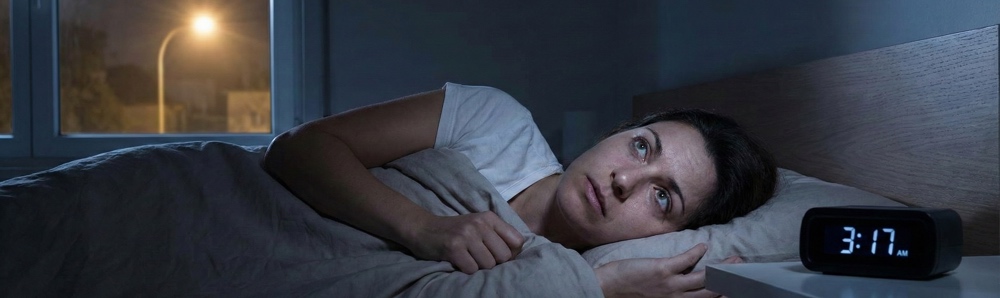
If your anxiety gets worse at night, you are not imagining it, and you are not alone. Many people who feel reasonably steady during the day find that worry, racing thoughts, and physical tension surge the moment the lights go out. Nighttime anxiety is one of the most common patterns clinicians see, and it responds well to evidence-based treatment. Understanding why your mind ramps up at bedtime is the first step toward changing it, whether that means adjusting your evening habits or pursuing structured therapy for an underlying anxiety disorder.
This article explains why anxiety intensifies at night, what actually helps, and when nighttime anxiety signals something that deserves professional attention.
Key Takeaways
- Anxiety often feels worse at night because daytime distractions disappear, leaving the mind free to focus on worry.
- Common nighttime patterns include racing thoughts, physical restlessness, dread about the next day, and waking in the early morning hours with a pounding heart.
- Fighting anxious thoughts or checking the clock usually makes nighttime anxiety worse, not better.
- Consistent evening routines, scheduled worry time, and reducing safety behaviors are practical strategies that help.
- When nighttime anxiety is frequent and disrupts your sleep, work, or relationships, structured treatment such as an intensive outpatient program can produce meaningful improvement.
Why Does Anxiety Get Worse at Night?
Anxiety intensifies at night primarily because the distractions that occupy your mind during the day disappear. Work, conversation, errands, and screens all compete for your attention while the sun is up. At bedtime, that competition ends, and the worries your brain postponed all day finally get the floor to themselves.
Biology plays a role too. As your body winds down, you become more aware of internal sensations like your heartbeat and breathing. For someone prone to anxiety, that heightened awareness can trigger alarm. A normal heart flutter noticed at 11 pm can feel far more threatening than the same sensation at noon, simply because there is nothing else to focus on.
There is also a learning component. If you have spent many nights lying awake worrying, your brain may begin to associate your bed with anxiety rather than rest. Over time, simply getting into bed can cue the anxious response, which is why nighttime anxiety often becomes more entrenched the longer it goes unaddressed.
What Does Nighttime Anxiety Feel Like?
Nighttime anxiety typically shows up as a combination of racing thoughts and physical activation right when you are trying to relax. People describe it in remarkably consistent ways, and recognizing the pattern can be reassuring in itself.
- Racing or looping thoughts that replay the day or rehearse tomorrow’s problems
- Physical restlessness, including muscle tension, a churning stomach, or the feeling that you cannot get comfortable
- A pounding or fluttering heart that draws your attention and fuels more worry
- Dread about not sleeping, which creates a frustrating cycle where worrying about sleep prevents sleep
- Early morning waking, often between 3 and 4 am, with an immediate surge of worry
None of these experiences mean something is medically wrong with you. They are the predictable result of an anxious mind meeting a quiet room.
What Actually Helps with Nighttime Anxiety?
The strategies that genuinely help with nighttime anxiety share a common theme: they reduce the struggle against anxious thoughts rather than trying to force them away. Fighting anxiety at midnight is a losing battle. Changing your relationship with it works better.
Practical approaches supported by clinical evidence include:
- Schedule worry time earlier in the day. Set aside 15 to 20 minutes in the late afternoon to write down worries and possible next steps. When worries surface at night, remind yourself they already have an appointment.
- Keep a consistent wind-down routine. Going to bed and waking at the same times, with a predictable hour of low-stimulation activity beforehand, trains your body to expect rest.
- Stop checking the clock. Clock checking is a safety behavior that feels helpful but reliably increases anxiety. Turn the clock around and leave your phone out of reach.
- Get out of bed if you cannot sleep. After roughly 20 minutes of wakefulness, move to another room and do something quiet until you feel drowsy. This protects the association between your bed and sleep.
- Let anxious thoughts be there. Trying to suppress a thought gives it power. Practicing acceptance, noticing the thought without engaging or arguing with it, gradually drains its urgency.
These strategies help most people to some degree. When anxiety is severe or persistent, though, self-help alone is usually not enough, and that is where structured treatment comes in.
When Does Nighttime Anxiety Signal Something More?
Occasional restless nights are part of being human. Nighttime anxiety deserves professional attention when it becomes frequent, when it spills into your days, or when you start organizing your life around it. Warning signs include losing sleep several nights a week, dreading bedtime, relying on avoidance or reassurance-seeking to get through the evening, or feeling exhausted and on edge during the day.
Nighttime anxiety is often the visible edge of a broader anxiety disorder, such as generalized anxiety disorder or panic disorder. When that is the case, treating the underlying condition, not just the sleep problem, is what produces lasting change.
How Is Persistent Anxiety Treated?
Persistent anxiety responds best to structured, evidence-based therapy that targets the avoidance and safety behaviors keeping the anxiety cycle alive. The gold-standard approach used at OCD Anxiety Centers is Exposure and Response Prevention (ERP), which helps you gradually face feared situations and sensations while dropping the behaviors, like reassurance-seeking and clock checking, that maintain the fear.
For anxiety that has not improved with weekly therapy, an intensive outpatient program offers a higher level of care without hospitalization. The program at OCD Anxiety Centers runs 16 weeks, with three hours of treatment daily, Monday through Friday. Adult sessions run from 12 to 3 pm and adolescent sessions from 3 to 6 pm, with care available for clients ages 8 and older. With an 8:1 client-to-staff ratio, clients receive substantial individual attention, and clients completing treatment see an average 67% reduction in symptoms.
Nighttime Anxiety Myths and Facts
Myth: Waking up anxious at 3 am means something is seriously wrong with your health.
Fact: Early morning waking with anxiety is a common and well-understood pattern. Cortisol naturally rises in the early morning hours, and an anxious brain interprets that activation as danger. It is uncomfortable, but it is not dangerous.
Myth: You should stay in bed and force yourself to sleep.
Fact: Lying in bed awake and frustrated teaches your brain that bed is a place of struggle. Getting up briefly and returning when drowsy protects healthy sleep associations.
Myth: If you just get more sleep, the anxiety will resolve on its own.
Fact: Sleep and anxiety influence each other, but sleep alone does not treat an anxiety disorder. When anxiety is the driver, addressing it directly through evidence-based treatment is what breaks the cycle.
Moving Forward
Nighttime anxiety can make every evening feel like a countdown to a battle, but it is a highly treatable pattern. The quiet hours amplify anxiety because there is nothing to compete with it, and the habits people naturally reach for, like clock checking and thought suppression, tend to feed the cycle rather than calm it. Practical changes to your evenings can bring real relief, and when anxiety runs deeper, structured treatment addresses the root of the problem instead of just the nighttime symptom. You do not have to keep dreading the dark, and effective help is available.
Frequently Asked Questions
Why do I wake up at 3 am with anxiety?
Early morning waking often coincides with the body’s natural cortisol rise, which an anxious brain can misread as a threat. Lighter sleep stages in the second half of the night also make it easier for worry to break through. It is a common pattern and one that evidence-based anxiety treatment addresses directly.
Can nighttime anxiety cause panic attacks?
Yes. Nocturnal panic attacks can wake you from sleep with a racing heart, shortness of breath, and intense fear. They are frightening but not dangerous, and they respond well to the same treatments that help daytime panic, including Exposure and Response Prevention (ERP).
How do I stop anxious thoughts at night?
Counterintuitively, the goal is not to stop them. Trying to suppress thoughts makes them louder. Scheduling worry time earlier in the day, allowing thoughts to pass without engaging them, and removing safety behaviors like clock checking are far more effective than fighting your own mind at midnight.
When should I get professional help for nighttime anxiety?
Seek help when nighttime anxiety happens several times a week, affects your daytime functioning, or leads you to dread going to bed. Those patterns usually indicate an underlying anxiety disorder that will respond better to structured treatment than to sleep tips alone.
What does treatment at OCD Anxiety Centers involve?
The intensive outpatient program runs 16 weeks with three hours of treatment daily, Monday through Friday, using Exposure and Response Prevention (ERP) and related evidence-based approaches. Care is available for clients ages 8 and older, and the program maintains a 92% client and parent satisfaction rate.
Will insurance cover intensive treatment for anxiety?
In most cases, yes. OCD Anxiety Centers maintains a 95% insurance coverage rate for its programs. The admissions department can verify your specific benefits before you commit to anything.
If anxiety is stealing your nights and draining your days, you do not have to manage it alone. Call OCD Anxiety Centers at 866-303-4227 to speak with the admissions department about evidence-based treatment for anxiety and OCD, and take the first step toward restful nights and steadier days.