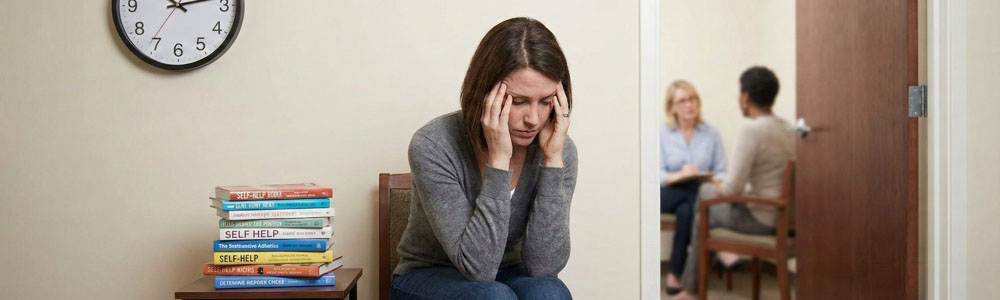

It can feel confusing, and honestly a little unsettling, to watch your teen move through the school day without any obvious issues, only to come home and completely unravel. At school they are functioning. They are getting through classes, interacting with teachers, maybe even laughing with friends. Then they walk through the door at home and everything shifts. Emotions come out quickly, reactions feel bigger, and the version of your teen you see at home feels completely different from the one the world sees during the day.
If you have ever found yourself wondering how both of these things can be true at the same time, you are not alone. This is a very common pattern in teens who are dealing with anxiety and/or OCD, and it becomes much easier to understand when we look at what is happening beneath the surface.
What You’re Seeing at Home
Before we break it down, let’s name what this often looks like. Many parents (just like you) describe:
- Irritability that seems to come out of nowhere
- Emotional outbursts over small things
- Shutting down or withdrawing
- Increased anxiety behaviors or compulsions
- A teen who says they are “fine” but clearly isn’t
These reactions can feel disproportionate in the moment, which is what makes them so confusing.
What’s Happening During the School Day
Throughout the school day, your teenager is working much harder than it appears. They are not just getting through academics. They are managing an internal experience that often goes unseen.
This can include:
- Monitoring their behavior and reactions
- Managing intrusive or anxious thoughts
- Suppressing urges, including compulsions
- Navigating social pressure
- Trying to appear “normal” to peers and teachers
While this can make it look like they are doing fine, it comes at a cost. Research on emotional suppression shows that when emotions are held in for extended periods of time, they tend to return later with greater intensity rather than resolving on their own (see Campbell-Sills et al., 2006).
Why Everything Changes at Home
By the time your teen gets home, two important shifts have happened, and together they explain most of what you are seeing.
1. The Environment Changes
Home is typically where teens feel safest. It is the one place where they do not have to maintain the same level of control or performance.
Because of that, it becomes the place where emotions that have been held in finally come out. In some ways, that is good for you! It means your teen feels safe and comfortable with you in their home. But it also means you are often left dealing with difficult behaviors the minute they walk in the door.
Research supports this. Emotional expression is more likely to occur in environments where someone feels secure, particularly within close family relationships (see Morris et al., 2007).
2. Their Capacity Changes
The second important shift happening is that their internal resources are depleted.
Managing anxiety all day requires effort. Regulating emotions requires effort. Holding everything together requires effort. And that effort builds up.
By the end of the day, there is simply less capacity left. We all experience this to some degree, but it is magnified when a teen struggles with anxiety or OCD.
When capacity drops, you are more likely to see:
- Lower frustration tolerance
- Bigger emotional reactions
- Difficulty recovering once upset
- Increased reliance on avoidance or compulsions
Why This Feels So Intense
When you put these pieces together, the pattern starts to make sense.
Your teen is not fine at school and then suddenly struggling at home. They are working hard to manage anxiety during the day, often by holding things in, and then reaching a point where that strategy is no longer sustainable. They simply can’t do it anymore.
What looks like an overreaction is more likely:
- The accumulation of stress from the entire day
- Combined with reduced emotional capacity
- In an environment where it finally feels safe to release it
What This Is Not
This is an important place to pause, because how this is interpreted shapes what happens next.
What you are seeing is NOT:
- Laziness
- Defiance
- Manipulation
- A lack of effort
More often, it is a sign of nervous system overload and limited capacity.
When This Pattern Becomes a Concern
While this pattern is common, it should not be ignored, especially if it is persistent.
You may want to look more closely if your teen is:
- Falling apart at home more days than not
- Struggling to recover after school
- Starting to struggle during school as well as at home
- Avoiding activities or responsibilities, especially if they are isolating themselves from family or friends.
- Showing increased anxiety or compulsive behaviors
- Seeming to “hold it together” publicly but deteriorate privately
This can be a sign that they are coping in the moment, but not actually improving.
Why This Pattern Keeps Repeating
Understanding what is happening is helpful, but it does not automatically change the pattern.
This is because anxiety tends to follow a predictable cycle:
- Anxiety shows up
- The teen suppresses or avoids it
- Internal pressure builds throughout the day
- Emotional release happens later
- The cycle starts again
And here’s the part that can feel frustrating for a lot of families.
Your teen might actually be doing everything they can to “push through” their day. From the outside, it can look like they are managing well. But internally, they are using strategies that only work short term. Over time, that pressure builds instead of resolving. It can also make the behaviors you are seeing worse, not better.
So the goal is not to help them push through better.
It is to help them stop needing to.
What Actually Helps
Real change happens when we shift how teens respond to anxiety, not just how they manage it temporarily.
Effective treatment focuses on:
Exposure and Response Prevention (ERP)
- Gradually facing anxiety instead of avoiding it
- Reducing the need to suppress or “hold it together”
- Building tolerance to discomfort over time
Building Real-Time Regulation Skills
- Recognizing rising anxiety earlier
- Responding in the moment rather than after overload
- Increasing emotional flexibility
Consistent, Structured Practice
- Practicing skills regularly, not just discussing them
- Reducing the daily buildup that leads to emotional collapse
And this is often where things start to shift for families.
When teens begin responding to anxiety differently during the day, they do not have to carry as much of it home with them.
When More Support May Be Needed
If this pattern feels familiar and ongoing, it may be time to consider a more structured level of care.
Not because something is “wrong” with your teen, but because what they are dealing with requires more support than occasional check-ins can provide.
An intensive outpatient program can help teens:
- Practice skills consistently throughout the week
- Work directly with real-life anxiety triggers
- Build momentum in treatment
- Close the gap between functioning and actually feeling better
Just because a pattern of behavior is common, does not mean that it is something you or you teen have to just live with. IOP can make the difference betweeen “just dealing” with a behavior and meaningful, lasting change.
A Final Thought
If you are reading this and thinking,
“This is exactly what’s happening in our house,”
you are not overreacting.
You are noticing something real.
And more importantly, something that has a solution with the right support.
It makes sense that your teen is exhausted at the end of the day. It makes sense that home is where it shows up. It even makes sense that it feels confusing and, at times, overwhelming for you as a parent.
But this is the part I want you to hold onto.
Your teen is not broken.
And this pattern is not permanent.
With the right tools, the right approach, and the right level of support, it is absolutely possible for things to feel more steady, both at school and at home.
At OCD Anxiety Centers, this is exactly the kind of work we do every day. Helping teens move from just getting through their day to actually feeling better in it.
And that is where real change starts.