
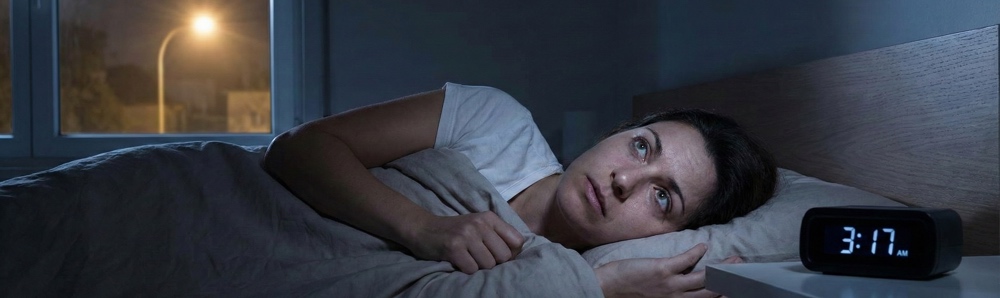
For many people living with anxiety, nighttime is the hardest part of the day. The distractions that kept anxious thoughts at bay during work or school disappear the moment the lights go off, and suddenly the mind is racing through worst-case scenarios, unresolved worries, and fears that feel magnified in the quiet. Nighttime anxiety is more than an inconvenience. It disrupts sleep, compounds daytime symptoms, and can make the entire anxiety cycle feel inescapable. Understanding why this pattern occurs and what evidence-based approaches actually help is essential for breaking free from it.
Why Does Anxiety Feel Worse at Night?
During the day, your brain is occupied with tasks, conversations, and environmental stimulation that serve as natural buffers against anxious thoughts. At night, those buffers vanish. Without competing demands for your attention, your mind defaults to processing unresolved concerns, and for individuals with anxiety disorders, this processing often spirals into excessive worry, catastrophic thinking, and physical tension.
There is also a biological component. The body’s natural stress response doesn’t simply switch off at bedtime. If your nervous system has been activated throughout the day, that heightened state can persist into the evening. Lying still in a dark, quiet room creates a stark contrast with the internal experience of a body that is still on alert, making the physical symptoms of anxiety feel more pronounced and harder to ignore.
What Types of Anxiety Cause Nighttime Symptoms?
Nighttime anxiety can be a feature of several anxiety disorders. People with generalized anxiety disorder (GAD) often find that chronic worry intensifies when daily distractions are removed. Those with social anxiety disorder may lie awake replaying social interactions and anticipating future ones. Individuals with panic disorder may experience nocturnal panic attacks that jolt them awake with intense physical symptoms. And people with OCD may find that intrusive thoughts become louder and more persistent when there is nothing else competing for their attention.
Regardless of which anxiety disorder is driving the nighttime symptoms, the underlying mechanism is similar: the brain perceives threat, the body responds with arousal, and the absence of external distractions allows the cycle to intensify.
Why Avoidance Strategies Don’t Work Long-Term
When nighttime anxiety becomes a pattern, many people develop avoidance behaviors to cope. Staying up late to avoid lying awake with anxious thoughts, scrolling through a phone to distract from worry, or avoiding the bedroom altogether may provide temporary relief. However, these strategies actually reinforce the brain’s association between nighttime and danger, making the anxiety worse over time.
This is the same avoidance cycle that drives all anxiety disorders. The more you avoid the situation that triggers anxiety, the more powerful that anxiety becomes. Breaking this pattern requires learning to face the discomfort directly, which is exactly what evidence-based treatment is designed to do.
How Does Evidence-Based Treatment Help With Nighttime Anxiety?
Exposure and Response Prevention (ERP), the gold standard for treating anxiety and OCD, directly addresses the avoidance cycle that fuels nighttime anxiety. Through gradual, structured exposure to anxiety-provoking situations, individuals learn that anxiety naturally decreases on its own without the need for avoidance or safety behaviors. Over time, the brain stops sending alarm signals in response to situations that are not actually dangerous.
Our intensive outpatient program delivers ERP therapy three hours per day, Monday through Friday, over a 16-week period. This concentrated format provides more practice and faster skill-building than weekly therapy sessions. Clients in our program achieve an average 64% symptom reduction, the highest rate in the country, with a 79% recovery rate. For individuals whose nighttime anxiety is part of a broader anxiety disorder, intensive treatment addresses the root cause rather than just managing individual symptoms.
Building Skills That Last Beyond the Program
One of the most important outcomes of ERP-based intensive treatment is that clients develop skills they carry with them long after the program ends. Rather than relying on temporary coping strategies, individuals learn to respond to anxious thoughts differently, creating lasting changes in how their brain processes perceived threats, including those that surface at night.
When Is It Time to Seek Help for Anxiety?
If nighttime anxiety is disrupting your sleep on a regular basis, affecting your ability to function during the day, or contributing to a cycle of avoidance that is shrinking your life, these are signs that professional support could make a significant difference. Our program serves individuals ages 8 and older, and 95% of clients are able to use their insurance for treatment. A virtual intensive outpatient option is also available, delivering the same evidence-based treatment with identical outcomes from the comfort of home.
Frequently Asked Questions
Why is my anxiety so much worse when I try to sleep?
Anxiety often intensifies at night because the distractions and activities that occupy your mind during the day are no longer present. Without competing demands for your attention, your brain shifts to processing worries and perceived threats, and for individuals with anxiety disorders, this can quickly escalate into a cycle of racing thoughts and physical tension.
Can nighttime anxiety be a sign of an anxiety disorder?
Yes. Persistent nighttime anxiety that disrupts sleep and affects daily functioning can be a symptom of generalized anxiety disorder, social anxiety disorder, panic disorder, OCD, or other related conditions. If nighttime anxiety is a regular occurrence, a professional evaluation can help determine whether an anxiety disorder is the underlying cause.
How is anxiety treated with evidence-based approaches?
Exposure and Response Prevention (ERP) is the gold standard treatment for anxiety and OCD. ERP involves gradually facing anxiety-provoking situations while resisting avoidance behaviors, teaching the brain that anxiety naturally decreases without the need for escape or safety behaviors. Our intensive outpatient program delivers ERP three hours per day, five days per week, for consistent and concentrated care.
What is the difference between an intensive outpatient program and weekly therapy for anxiety?
An intensive outpatient program provides three hours of structured treatment five days per week, compared to the one hour per week typical of traditional therapy. This concentrated approach allows for more consistent exposure practice and faster skill development. Our program achieves a 64% average symptom reduction and a 79% recovery rate through this evidence-based model.
Can anxiety be treated without medication?
Yes. ERP therapy is highly effective as a standalone approach for treating anxiety disorders. Our intensive outpatient program uses evidence-based therapeutic methods to help clients achieve significant symptom reduction without relying on anything other than structured, proven therapeutic techniques.
Does insurance cover intensive anxiety treatment?
In most cases, yes. Approximately 95% of clients in our program are able to use their insurance for treatment. Our team assists with verifying coverage so that financial concerns do not become a barrier to getting the help you need.
Nighttime anxiety does not have to dictate how you sleep or how you feel during the day. Evidence-based treatment can address the root causes of your anxiety and equip you with lasting skills to manage it effectively. To learn more about our intensive outpatient program, call 866-303-4227 and start your path toward better nights and better days.