
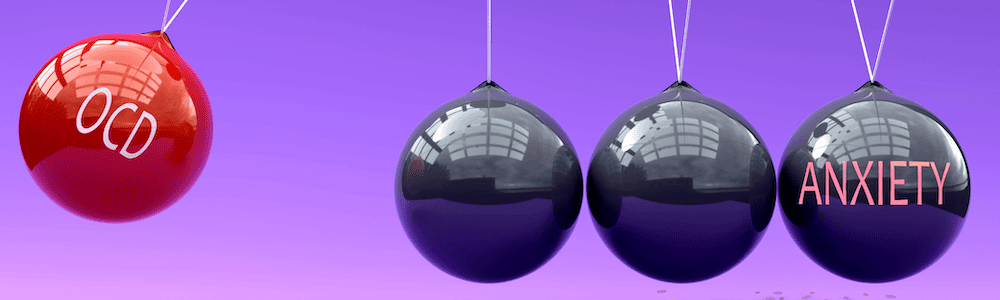
OCD and anxiety disorders share a lot of overlap, which is why so many Seattle residents searching for OCD treatment in Seattle or anxiety treatment in Seattle, Washington are not entirely sure which category they actually fall into. The overlap is not coincidental. Both conditions involve fear, avoidance, and a brain that has learned to treat ordinary thoughts or situations as dangerous. But the differences matter for treatment, and getting matched to the right diagnosis early can be the difference between treatment that works and treatment that misses the mechanism driving symptoms. This article walks through how OCD and anxiety disorders actually differ, where they overlap, and how to think about which one (or which combination) is most likely behind what you are experiencing.
The good news for treatment: the gold-standard approach for both OCD and most anxiety disorders is the same evidence-based methodology. Knowing which condition you are working with sharpens treatment, but it does not require a different program.
Key Takeaways
- OCD and anxiety disorders share core features like intrusive thoughts, fear, and avoidance, but OCD specifically involves compulsions performed to neutralize obsessions, while anxiety disorders generally do not.
- Compulsions can be observable behaviors (washing, checking, counting) or entirely mental (repeating phrases, reviewing memories, neutralizing thoughts with other thoughts), which is why OCD is often missed in people who do not have visible rituals.
- Generalized anxiety disorder, social anxiety, and panic disorder do not typically involve compulsions in the OCD sense; they involve worry, avoidance, and physical anxiety responses without the obsession-compulsion cycle.
- Many people have both OCD and an anxiety disorder, which is clinically common and does not require choosing one diagnosis over the other for treatment purposes.
- Exposure and Response Prevention (ERP) is the gold-standard treatment for both OCD and most anxiety disorders, which means our Seattle program addresses both within the same intensive outpatient framework.
- Our Seattle program achieves an average 64% symptom reduction across OCD and anxiety treatment, the highest rate in the country, with 79% of clients reaching recovered status.
What Anxiety Disorders Are
Anxiety disorders are a category of conditions characterized by excessive fear, worry, or avoidance that significantly interferes with daily functioning. The most common anxiety disorders are generalized anxiety disorder (chronic worry across many areas of life), social anxiety disorder (fear of being judged or evaluated in social situations), panic disorder (recurrent panic attacks and fear of having more), and specific phobias (intense fear of particular objects or situations).
What unites the anxiety disorders is the pattern: a trigger produces anxiety, the person avoids or escapes the trigger, the avoidance produces temporary relief, and the brain learns to keep treating the trigger as dangerous. The fear response is automatic, the avoidance is reinforcing, and the cycle perpetuates the disorder. There is no specific “compulsion” required to break the anxiety; avoidance and safety behaviors are the main maintenance mechanism.
What OCD Is
Obsessive-compulsive disorder shares the underlying fear and avoidance pattern with anxiety disorders but adds a specific second piece: compulsions. OCD involves two clinical components, obsessions (intrusive, unwanted thoughts, images, or urges that cause significant distress) and compulsions (repetitive behaviors or mental acts performed to neutralize the obsession or prevent a feared outcome).
The compulsion is what makes OCD specifically OCD. A person with anxiety might avoid going to a crowded event because it makes them anxious. A person with OCD might attend the event but spend the entire time performing mental rituals (counting, reviewing, neutralizing thoughts) to prevent an imagined catastrophe. The obsession demands the compulsion. The compulsion produces temporary relief. The brain learns to keep doing it. The cycle is structurally different from a pure anxiety disorder, and it requires treatment that specifically addresses the compulsion piece, not just the underlying fear.
The Overlap: Where Anxiety and OCD Look Similar
Several presentations sit close enough to the border that it is genuinely hard for non-specialists to differentiate.
Worry that feels compulsive. Generalized anxiety disorder involves chronic worry that can feel rumination-like and almost ritual. The difference: GAD worry is usually about realistic future problems and is not performed in response to a specific obsession. OCD rumination is more often a mental compulsion performed to neutralize a specific intrusive thought.
Checking behavior. A person with anxiety might check their car door is locked twice. A person with OCD might check it 30 times, or might check it twice but then need to perform a mental ritual to feel certain it is locked. Frequency and the obsession-compulsion structure are what separate them.
Reassurance-seeking. Anxiety disorders often involve seeking reassurance from others. OCD does too, often more intensely and around specific recurring concerns. When reassurance-seeking is compulsive (must be done, must be done repeatedly, brings only temporary relief, then must be done again), the pattern is more OCD-flavored.
Mental rituals. Pure obsessional OCD (sometimes called “Pure O”) involves entirely internal compulsions: praying, counting, reviewing, neutralizing thoughts with other thoughts. Because there is no visible ritual, this presentation is frequently misdiagnosed as anxiety, depression, or “just overthinking.” It is OCD.
OCD and Anxiety Treatment in Seattle, Washington
Our Seattle program is located at 10700 Meridian Ave N, Suite 215, in the Northgate neighborhood. The program treats both OCD and anxiety disorders within the same intensive outpatient framework, because both respond to the same gold-standard treatment methodology (Exposure and Response Prevention). The location serves clients throughout Seattle and the surrounding north Seattle communities, including Shoreline, Edmonds, Lynnwood, Lake City, Ballard, Wallingford, Capitol Hill, the University District, West Seattle, and Burien.
Why Specialist Assessment Matters in Seattle
Seattle has a substantial general mental health provider ecosystem, but OCD and anxiety subtype specialists are less common than the population would suggest. Many clients arrive at our Seattle program after years of weekly therapy where the diagnosis was framed as anxiety or stress, when the underlying mechanism was actually OCD that the treating clinician had not been trained to recognize. The reverse also happens, with what looks like OCD turning out to be anxiety with strong avoidance patterns. Specialist assessment matters because the diagnostic framing shapes everything that comes after, including which exposures the treatment hierarchy is built around. Our admissions process includes structured clinical evaluation that distinguishes OCD from anxiety subtypes and identifies cases where both are present.
How Treatment Differs Based on the Diagnosis
The methodology is the same: Exposure and Response Prevention, delivered through the intensive outpatient format. What changes is what the exposures look like and what the response prevention targets.
For pure anxiety disorders without OCD, exposures target the specific feared situations (social settings, crowded spaces, panic-triggering sensations, driving on highways, public speaking). Response prevention focuses on safety behaviors and avoidance patterns. The work is generally more focused on the external situations the person has been avoiding.
For OCD, exposures target the obsessions (touching feared surfaces, sitting with intrusive thoughts, being in situations that trigger the OCD theme). Response prevention is the central pillar, because OCD is maintained primarily by compulsions, and the compulsion (whether observable or mental) has to be deliberately not performed for the OCD cycle to actually change. The work goes deeper into the internal cognitive and behavioral rituals than is typical for pure anxiety treatment.
For clients with both, treatment addresses both, often beginning with whichever pattern is more functionally impairing and integrating the second as the first responds. The intensive format is particularly well-suited to comorbid presentations because the daily structure allows for layered exposure work that weekly therapy often cannot accommodate.
OCD and Anxiety Myths and Facts
Several confusions about the OCD-anxiety relationship lead to delayed or mismatched treatment.
Myth: OCD is just severe anxiety.
Fact: OCD and anxiety share underlying features but have a structurally different maintenance pattern. OCD involves obsessions paired with compulsions; anxiety disorders involve fear paired with avoidance. The treatment approach overlaps significantly (ERP works for both), but the specific exposures and response prevention targets differ. Calling OCD “just severe anxiety” obscures the compulsion piece that is central to the disorder.
Myth: If you do not have visible rituals, you do not have OCD.
Fact: Pure obsessional OCD (mental compulsions only) is a recognized and common OCD presentation. Praying repeatedly, counting silently, reviewing memories, neutralizing intrusive thoughts with other thoughts, and other internal rituals all count as compulsions. Visible behavior is not required for an OCD diagnosis.
Myth: I should figure out which one I have before starting treatment.
Fact: Distinguishing OCD from anxiety subtypes is genuinely clinical work that requires structured assessment, not self-diagnosis. The right move is to engage with a program whose clinicians can make the differentiation in intake and tailor treatment accordingly. Waiting to self-diagnose before calling delays treatment for both possibilities.
Myth: Having both means more complicated treatment.
Fact: Comorbid OCD and anxiety are common, and the intensive outpatient format is particularly well-suited to treating both simultaneously. The same evidence-based ERP methodology addresses both, and integrated treatment is often more efficient than treating them sequentially.
What This Means for You
The question of whether you have OCD, an anxiety disorder, or both is genuinely worth answering, but it is not something you have to answer alone before seeking treatment. The differentiation is clinical work, and a structured intake assessment will get you to a much more accurate picture than self-research can. What matters most is recognizing that the symptoms you have been dealing with, intrusive thoughts, compulsive behaviors, chronic worry, avoidance, panic, social fear, or any combination, are treatable through evidence-based methods that work specifically for these patterns. Our Seattle program treats the full range of OCD and anxiety presentations within the same intensive framework, with outcomes that consistently outperform weekly therapy for moderate to severe cases.
Frequently Asked Questions
How do I know if I have OCD or generalized anxiety?
The clearest distinguishing feature is the presence of compulsions. If you experience specific intrusive thoughts that drive you to perform repetitive behaviors or mental acts to neutralize them, OCD is the more likely diagnosis. If you experience chronic worry across many areas of life without the obsession-compulsion structure, GAD is more likely. A structured intake assessment at our Seattle program can make the distinction definitively.
Can the Seattle program treat both OCD and anxiety at the same time?
Yes. Both respond to Exposure and Response Prevention, and the intensive outpatient format integrates treatment for comorbid presentations within the same 16-week program. Many clients have both, and treatment is designed to address both rather than requiring sequential treatment.
Is there a difference in how long OCD vs anxiety treatment takes?
The program structure is the same: 16 weeks at three hours per day, Monday through Friday. Individual progress varies, but the program length is consistent across diagnoses. Most clients begin to see meaningful symptom reduction within the first few weeks regardless of which diagnosis is primary.
Does insurance cover both OCD and anxiety treatment in Seattle?
Yes. Most major commercial insurance plans in Washington cover IOP services for both OCD and anxiety disorders under federal mental health parity laws. 95% of clients at our Seattle program are able to use insurance for treatment. Verification is free.
What if I am not sure which one I have?
This is a common situation and a good reason to call. Our intake process includes structured clinical assessment that distinguishes between OCD and anxiety subtypes and identifies comorbid presentations. You do not need to know the diagnosis before reaching out.
Is “Pure O” really OCD?
Yes. Pure obsessional OCD, where compulsions are entirely mental rather than observable behaviors, is a recognized OCD presentation. Internal rituals like counting, praying, reviewing, or neutralizing thoughts with other thoughts all count as compulsions. Pure O is common and treatable with the same ERP-based approach used for other OCD presentations.
Is virtual IOP available for both OCD and anxiety in Seattle?
Yes. Virtual IOP delivers identical outcomes to in-person care across both OCD and anxiety treatment. Virtual care is available throughout Washington and is often a good fit for clients outside the immediate Seattle area or those needing additional schedule flexibility.
If you are not sure whether OCD, an anxiety disorder, or both is driving what you have been experiencing, a structured clinical conversation is the most efficient way to get clarity. Call our admissions department at 866-303-4227. Insurance verification is free, and the admissions team can answer specific questions about both OCD and anxiety treatment, walk through the assessment process, and explain what intensive treatment would look like for your situation.